


AltLife Sim
4.276.00 Reviews
App Specs
- Version
- 0.21.2
- Updated On
- License
- Free
- Downloads
- 50,000+
- Developer
- Bountiful Games, LLC
- Categories
- Simulation
- Platform
- Android
Screenshots




 Analysis by AppCompare
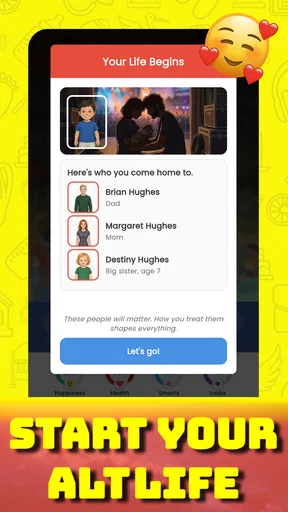
I went into AltLife Sim expecting a quick life simulator and found something more flexible than its short store label suggests. The basic idea is easy to understand: make choices, watch a virtual life develop, and decide whether to follow the available path or create a different one through your own decisions. What makes the experience interesting is not a complicated control scheme, but the way small choices can change the direction of a run.
This is a free simulation game from Bountiful Games, LLC, aimed at players who enjoy experimenting rather than chasing a single perfect outcome. It has a Teen content rating, and the current version is 0.21.2. The game has reached over 50 thousand installs, with a 4.3 average from around 440 ratings and 71 written reviews. Those figures suggest a modest but engaged audience rather than a huge mainstream release.
My main advice is to approach it as a casual decision-making game, not as a detailed management simulator. If you want to spend a few minutes testing an unusual life path, it can be a good fit. If you need deep strategy, rich visual presentation, or a carefully explained tutorial, the first few minutes may feel less welcoming.
Where new players can get stuck
The first point of friction is the open-ended premise itself. A game that lets you choose your direction sounds immediately accessible, but freedom can also make the next step unclear. I found that the best way to begin was not to search for the “correct” decision. Instead, I treated the opening run as a test: I made a few choices, watched how the life developed, and learned what sort of consequences the game seemed to emphasize.
That approach matters because life simulators are often more enjoyable when you accept that a run can go badly. A poor result is not necessarily a failed session. It can reveal how the game handles a particular choice and give you a useful reference for the next attempt. Players who restart every time something unexpected happens may miss the experimentation that gives this type of game its personality.
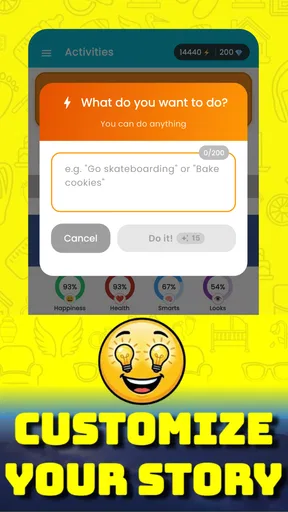
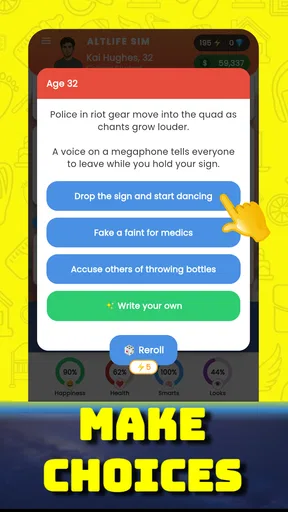
Another possible sticking point is the difference between writing your own direction and simply selecting from presented options. The appeal of this title is the feeling that you are shaping a personal story, but that does not mean every outcome will behave exactly as you imagine. I recommend reading each choice carefully and considering its likely effect before tapping quickly. The game rewards attention more than frantic input.
Because the experience is built around decisions, it is also easy to lose track of why a run took a particular turn. I found it useful to pause mentally after an important choice and remember what I was trying to achieve. Was I testing a risky path, trying to build a stable life, or simply seeing how strange the result could become? Keeping that small goal in mind makes the session feel more coherent.
Worth Reading Before You Choose

Flipboard Shows What News Apps Must Do Beyond the Feed

Switching to Android Auto Means Rethinking Your Driving Routine

Google Calendar Makes a Crowded Week Easier to Manage

Ludo King Makes the Most of the Minutes Between Plans

Baby Panda World Brings Quick Play to Modern Phones, but Its Game Library Feels Busy

ESPN’s Live Game View Makes Following Close Games Easier
What the opening experience is really asking from you
AltLife Sim is not primarily asking whether you can master a complicated interface. It is asking whether you enjoy interpreting situations and living with consequences. That distinction helps set expectations. The game is closer to an interactive life experiment than to a conventional simulation where you optimize every resource.
I would especially recommend slowing down if you normally tap through text-heavy games. The wording of a choice is part of the play, and rushing can make the results feel random even when they are connected to what you selected. A short session played attentively is more rewarding than a longer session treated as a sequence of buttons.
There is also a useful social angle. I can imagine comparing unusual runs with friends, not because the game needs a competitive leaderboard, but because different decisions can produce very different stories. That makes it a pleasant conversation game: you can explain what you tried, where the plan changed, and whether the result was better or worse than expected.
Setup checks before blaming the game
The game is free to start, which removes the biggest barrier for curious players. It does include optional in-app purchases ranging from $1.99 to $99.99 per item, so I would recommend checking your spending settings before handing the device to a child or younger family member. The Teen rating is another reason to consider whether the tone and subject matter suit the person who will use it.
On the technical side, the listed minimum operating-system requirement is Android 7.0. That is relatively accessible for many older devices, but meeting a minimum requirement does not guarantee an equally smooth experience on every phone. Before troubleshooting the game itself, I would close other demanding apps, make sure the device has reasonable free storage, and restart the phone if the installation or first launch behaves strangely.
These are simple checks, but they prevent a common mistake: treating every loading delay or failed launch as a game defect. A crowded device, an unstable connection during installation, or an operating system that has been running for a long time can create symptoms that disappear after a clean restart.
I would also install the current version rather than relying on an old copy. The version identified for the game is 0.21.2, and keeping the installation current is especially sensible for a title that is still evolving. If the store page offers an update, apply it before spending time changing settings or reinstalling.
On iOS, the same general principle applies even though the listed minimum operating-system detail is expressed as Android 7.0. Use the official store version for the device, keep the system reasonably current, and avoid judging the game from a sideloaded or modified installation. A clean, standard installation gives you the fairest experience and makes later troubleshooting much easier.
A sensible first-session routine
My preferred setup routine is deliberately boring. I install the game from the official store, launch it with other apps closed, and give the opening sequence my full attention. I do not immediately buy anything, change several device settings, or assume that an unexpected result means the game is broken. First I establish whether the basic loop works: start a life, make choices, move through the sequence, and see whether progress continues normally.
This routine has a practical advantage. If something does go wrong, you know it happened in a clean session. That makes it easier to separate a problem with the game from a problem caused by the device, network, storage, or an earlier installation.
I also suggest waiting before making an in-app purchase. The free experience is enough to decide whether the decision-based format suits you. Since the purchase range extends from a small amount to a much larger one, trying the core loop first is the most sensible way to avoid paying for a style of game you may not enjoy.
Recovering a run when the workflow goes wrong
When a session does not behave as expected, I would troubleshoot in stages rather than immediately deleting the game. First, leave the current screen and reopen the app. If that does not help, fully close it and restart the device. Then check whether an update is available and whether the phone has enough free space for normal operation.
This order protects your progress as much as possible. Reinstalling is a more disruptive step, especially in any game where a current life or run matters to you. I would reserve it for repeated launch failures or persistent problems that survive a restart and an update. Before taking that step, make sure you understand whether removing the installation could affect local progress or purchase access.
If a choice appears not to produce the result you expected, I would first consider whether the outcome is simply part of the simulation. The whole point of the format is that decisions can move a life in an unexpected direction. A surprising result is different from a frozen screen, a crash, or controls that stop responding. Separating those cases prevents unnecessary resets.
For a frozen or unresponsive screen, the safest general workflow is to wait briefly, close the app, and reopen it. If the problem repeats at the same point, note what you were doing immediately beforehand. That detail is more useful than a vague report that “the game stopped.” You can then test whether the issue occurs only in one run or across a fresh start.
For an installation that will not complete, I would check the network connection, available storage, and store account before blaming the title. Switching between a weak mobile signal and a stable Wi-Fi connection can also clarify whether the problem is the download rather than the game. Once installed, launch it once before restoring other settings or opening several background apps.
How to make each run easier to understand
A small but effective habit is to give every run a theme. Try a cautious life, an ambitious life, or a deliberately unpredictable one. This is more than a role-playing trick. It gives you a standard for judging the choices, so you can tell whether an outcome was disappointing because it was poorly handled or simply because it conflicted with your chosen goal.
Another useful technique is to avoid changing your objective halfway through a run unless the story itself forces you to. If you begin by pursuing stability and then suddenly chase every risky option, the final result may feel inconsistent. Keeping a clear intention helps you understand the relationship between your decisions and the life that follows.
I would also avoid treating one run as a complete review of the game. A decision simulator needs repeated play to show its range. You do not need marathon sessions; several short experiments are more informative than one rushed attempt. This is particularly helpful if the first outcome feels ordinary, because the appeal is often in testing a different direction rather than repeating the same safe choices.
When the app is not the cause
Some frustrations come from expectations rather than technical faults. If you are looking for a visually elaborate world with constant animation, this may not be the right choice. Its strength is the act of choosing and imagining the consequences, so players who prefer direct action or detailed character control may find the experience too abstract.
The same applies to people who want a strict winning strategy. A conventional management game usually gives you clear resources, measurable targets, and a defined route to improvement. AltLife Sim is better suited to players who are comfortable with uncertainty and personal interpretation. You can make sensible choices and still receive an outcome that is not the one you pictured.
It may also not suit someone who dislikes reading or reflecting before acting. The game’s premise depends on choices carrying meaning, so rapid tapping reduces much of what makes it distinctive. If your ideal mobile session is a fast arcade round that can be understood without text, another category would probably serve you better.
On the other hand, it has a clear advantage over many conventional life-management alternatives: it is easier to approach casually. You do not need to learn a large system before trying an idea. I can open it with a simple question in mind, make a few decisions, and close it without committing to a long campaign. That makes it a better match than a heavier simulator for short breaks.
It also differs from purely random story generators. Even when an outcome surprises me, the choices give the session a sense of participation. I am not only watching a story unfold; I am testing a direction. That distinction is important for players who want agency without the workload of a detailed spreadsheet-style simulation.
A realistic everyday use case
Imagine having ten minutes while waiting for an appointment. A large strategy game may take too long to load into a meaningful state, while a competitive game may demand more attention than the situation allows. AltLife Sim can fit that gap because the focus is on individual decisions rather than precise timing. I would start a run, choose a simple personal goal, and see how far the scenario develops before putting the phone away.
It can also work as a low-pressure evening game. Instead of trying to maximize every result, you might create an intentionally unusual life and compare the outcome with a more cautious attempt later. That kind of contrast gives the game replay value without requiring you to memorize a complicated control system.
For families, I would treat the Teen rating and optional purchases seriously. The game may be easy to start, but ease of access is not the same as suitability for every age. I would let younger players use it only when the rating, device settings, and spending controls match the household’s expectations.
My practical verdict after testing the format
AltLife Sim works best when you want a flexible, choice-led simulation that can be played in short bursts. I like that its central idea does not force one ideal lifestyle or one correct solution. The fun comes from setting a direction, making decisions, and seeing whether the virtual life agrees with your plan.
The main limitation is also built into that design. Players who need detailed explanations, predictable progression, or a rich management layer may feel that the experience lacks structure. It is not the game I would choose when I want deep optimization. I would choose a more traditional management simulator for that, especially if I wanted clear resources and long-term planning.
For everyone else, I recommend starting slowly, trying the free experience before considering purchases, and treating unexpected outcomes as information rather than immediate failure. Keep the installation current, use a clean setup when troubleshooting, and avoid deleting a run until you have ruled out simpler causes.
My final impression is positive but specific: this is a good pick for curious players who enjoy asking “what happens if I choose this?” It is less convincing for anyone seeking action, visual spectacle, or a tightly controlled strategy challenge. If you enjoy experimenting with different life paths and can accept that the game may not always explain every turn in the way you expect, Bountiful Games, LLC has created a compact simulation worth trying.
Pros
- Detailed life paths make each playthrough feel different.
- Wide range of careers
- relationships
- and lifestyle choices.
- Simple interface makes menus easy to navigate.
- Random events add surprises and replay value.
- Works well for short sessions or longer playthroughs.
Cons
- Some outcomes can feel repetitive after several generations.
- Progress may depend heavily on in-game currency or waiting.
- The interface can feel crowded on smaller phone screens.
- Limited visual variety compared with more graphical life sims.
- Ads may interrupt play unless removed through an optional purchase.
FAQs for AltLife Sim
What is AltLife Sim, and what can I do in the game?
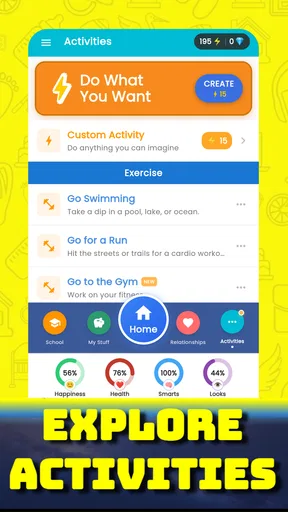
AltLife Sim is a text-based life simulation game in which you guide a virtual character from birth through adulthood and old age. You can make decisions about education, careers, relationships, money, health, and lifestyle. Each choice can influence your character’s future, so the experience is built around experimenting with different paths and seeing how your virtual life develops.
Is AltLife Sim free to download and play?
AltLife Sim can generally be downloaded and played without paying an upfront purchase price, but the exact monetization system may vary depending on the platform and version available in your region. Some features, bonuses, or conveniences may be offered through advertisements or optional in-app purchases. Before downloading, check the current store listing for pricing, subscriptions, and any available purchase restrictions.
Does AltLife Sim require an internet connection?
Many of AltLife Sim’s core life-simulation features may work without a constant internet connection because the gameplay is primarily menu- and text-based. However, an internet connection can still be necessary for downloading updates, displaying advertisements, restoring purchases, or accessing certain online features. Offline behavior may differ between Android and iOS versions, so testing the game after installation is recommended.
Is AltLife Sim suitable for children and teenagers?
AltLife Sim is designed for mature decision-making and may include subjects such as relationships, romance, finances, illness, crime, substance use, and other realistic life situations. Because of this, it may not be appropriate for younger children. Parents should review the age rating, store description, privacy information, and in-game content before allowing a child or teenager to install and play it.
Will my progress in AltLife Sim be saved, and can I transfer it to another device?
Your progress is normally saved through the game’s local save system, but the exact behavior can depend on the version installed and the device you use. Deleting the app, clearing its data, or changing platforms may remove your characters and progress. If cloud saving or account synchronization is available, confirm that it is enabled before switching devices, reinstalling the game, or applying a major update.


